

LevelStream
Connected Tank Gauge — Zero SIM, Eight Years
A battery-powered IoT sensor measuring fluid levels to the centimetre and transmitting continuously via X-Stream — deployed worldwide across fuel, agriculture, and construction, compatible with any standard tank, requiring no technical installation.
Tanks running dry. Unnecessary delivery runs. Float gauges that haven't changed in decades.
Fuel oil tanks, rainwater reservoirs, agricultural tanks, and industrial containers share a common operational problem: nobody knows exactly how much is left until it's too late. Suppliers make unnecessary delivery runs. Facilities run dry unexpectedly. Monitoring requires manual checks, on-site visits, or unreliable float gauges that haven't changed in decades.
IoT-Link set out to solve this with a connected sensor that could be deployed on any tank, anywhere in the world, and transmit level data continuously — without requiring a power source, a SIM card, or technical installation expertise. The hardware challenge was clear: build a device precise enough to be operationally useful, robust enough to survive field conditions, and energy-efficient enough to run for years on a single battery.
Nobody knows exactly how much is left — until it's too late.
Centimetre precision. Eight-year battery. No SIM. No ISP. Deployable anywhere on earth.
Thelis designed the electronics and embedded firmware for LevelStream — IoT-Link's connected tank gauge — handling the full hardware and embedded stack while IoT-Link managed the enclosure, production, cloud platform, and X-Stream network connectivity. The central engineering challenge was power architecture: designing a system that could operate for up to eight years on a single battery, with configurable measurement and transmission frequency, without compromising on data reliability or transmission range.
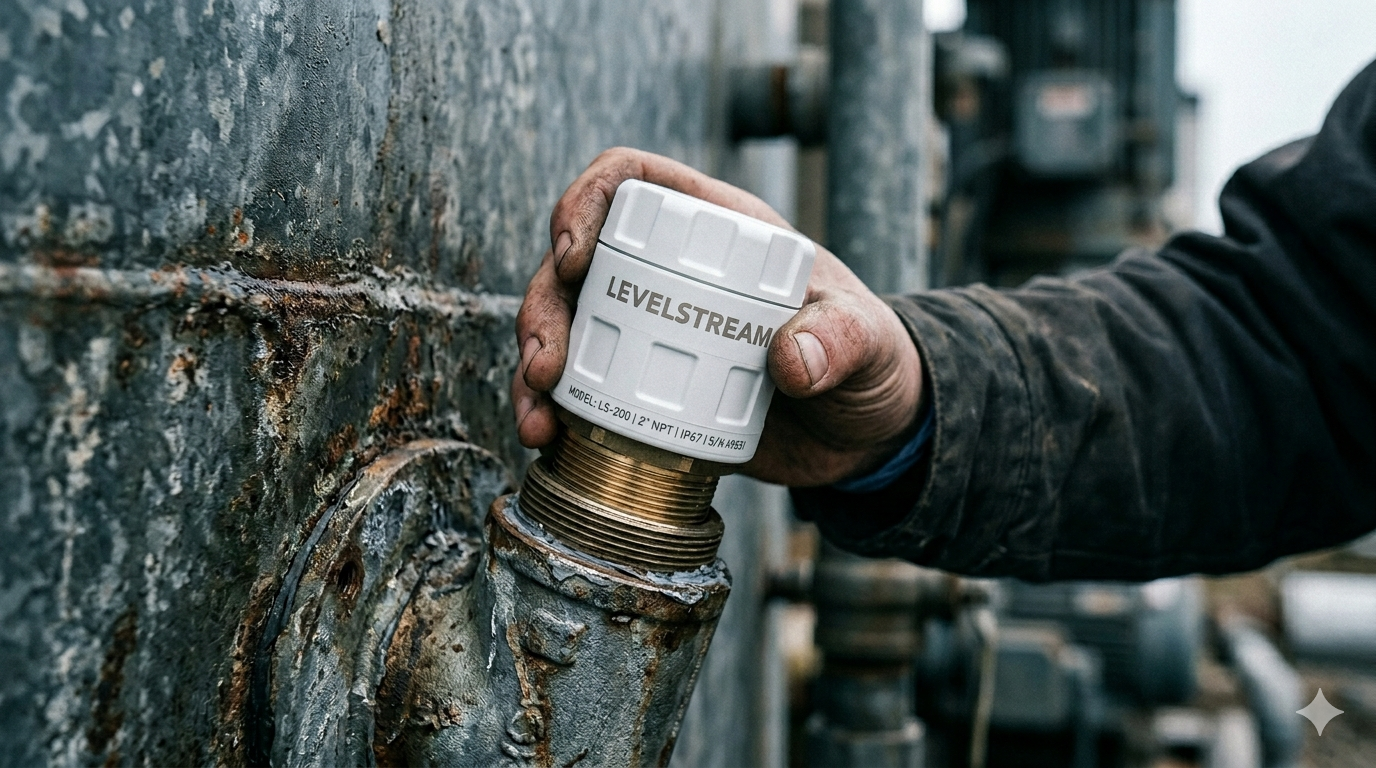
Ultra-low power architecture
Eight years of battery life engineered from day one — aggressive duty cycling, minimized radio transmission time, optimized measurement routines, and precisely tuned sleep states. The device spends the vast majority of its life consuming near-zero current. Every microsecond of active processing and every byte transmitted has an energy cost that compounds over an eight-year horizon.
Centimetre-precision measurement
The device measures fluid levels to the nearest centimetre across the full range of tank geometries, temperature fluctuations, condensation, and fuel vapours. Calibrating the measurement system to deliver reliable accuracy in uncontrolled field conditions required careful embedded signal processing and validation work across real deployment scenarios.
X-Stream worldwide connectivity
Data transmitted via IoT-Link's X-Stream network — no SIM card, no local ISP subscription required. The device is geolocated, making it equally suitable for fixed tanks in rural locations and mobile equipment like generator sets deployed across multiple sites anywhere in the world.
CE-certified radio stack
Getting a wireless IoT device to market requires CE certification of the modem and radio components — technically demanding, time-consuming, and unforgiving of design shortcuts. Thelis navigated the full certification requirements for the X-Stream radio stack, ensuring electromagnetic compatibility and radio spectrum compliance across all deployment markets.
Commercially deployed across fuel, agriculture, property, and construction — one battery, eight years.
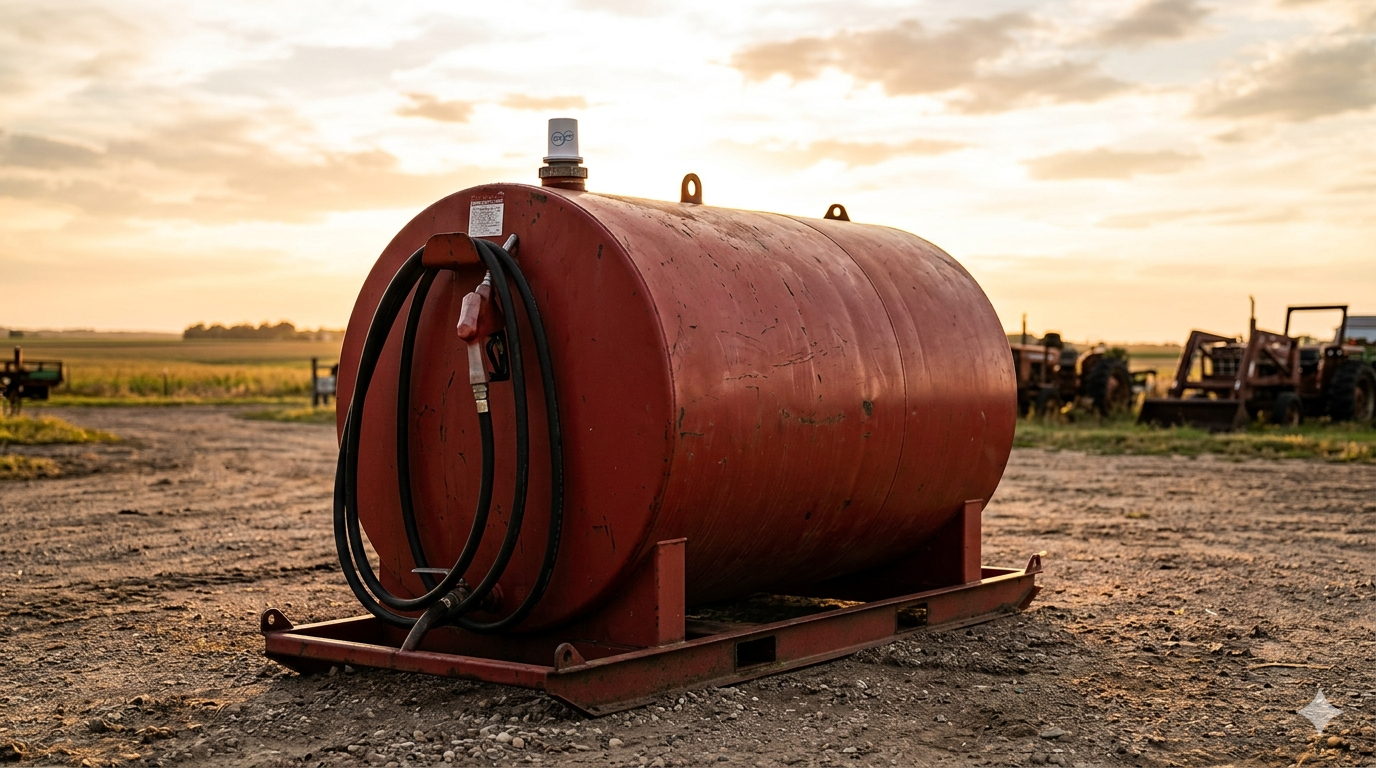
A commercially deployed connected gauge now active across multiple sectors — fuel suppliers, property managers, farmers, and construction site operators — providing continuous tank level monitoring with no maintenance requirement beyond a battery change approximately every eight years.
Installation is plug-and-play, compatible with all three standard tank thread types, requiring no technical expertise on site. With geolocation built in and no SIM dependency, LevelStream is equally suited to fixed tanks in remote locations and mobile equipment deployed across multiple sites worldwide.
Key Challenges
Power optimization as the central design constraint
Eight years of battery life is not a specification that can be bolted on at the end of a design — it has to drive every decision from the start. Thelis engineered the embedded firmware around aggressive power management: duty cycling the processor, minimizing radio transmission time, optimizing measurement routines, and tuning sleep states to ensure the device spends the vast majority of its life consuming near-zero current. Every microsecond of active processing and every byte transmitted has an energy cost that compounds over an eight-year horizon. This constraint shaped the hardware architecture, the firmware design, the communication protocol choices, and the measurement strategy simultaneously.
Certifying the radio stack
Getting a wireless IoT device to market requires CE certification of the modem and radio components — a process that is technically demanding, time-consuming, and unforgiving of design shortcuts. Thelis navigated the full certification requirements for the X-Stream radio stack, ensuring the device meets electromagnetic compatibility and radio spectrum standards across the markets where LevelStream is deployed. Certification is not a rubber stamp — it requires that the hardware and firmware be designed with compliance in mind from the start, not adapted retroactively once the design is locked.
Precision measurement in uncontrolled environments
Measuring fluid levels to the nearest centimetre sounds straightforward until the device is deployed in a real tank — with varying geometries, temperature fluctuations, condensation, and fuel vapours affecting sensor behavior. Calibrating the measurement system to deliver reliable accuracy across the range of conditions and tank shapes encountered in the field required careful embedded signal processing and validation work across real deployment scenarios. Laboratory accuracy is a necessary but insufficient benchmark. The system had to perform consistently in environments that cannot be anticipated in full at design time.