
D-CAF
Next-Generation Dosimetry for Particle Therapy
A 48-month collaborative R&D program to develop a new generation of dosimetry instruments — directly impacting the precision and availability of cancer treatment systems worldwide.
Measurement tools that couldn't keep up with the science.
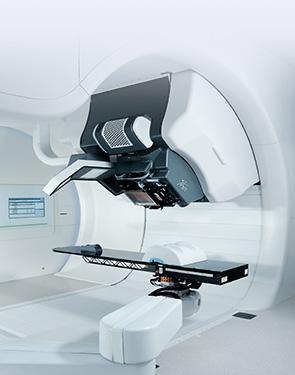
Proton therapy — one of the most precise forms of cancer treatment available — depends entirely on dosimetry: the ability to measure, with extreme accuracy, the radiation dose delivered to a patient. As IBA develops new particle therapy systems and therapeutic techniques continue to advance, the measurement tools used to validate treatment quality must evolve with them.
Existing dosimetry systems were not designed for the demands of next-generation therapies. The challenge was not incremental improvement — it was resolving fundamental technological barriers in ionizing radiation detection and measurement electronics, with a direct impact on patient safety and treatment availability.
Accuracy here is not a performance metric. It directly determines whether a patient receives the correct dose.
760 electrodes. Double the precision. Built across hardware, firmware, and software.
D-CAF was a 48-month collaborative R&D program co-funded by the Walloon Region, bringing together IBA, UCLouvain, ULB, and Thelis under the BioWin and Pôle MecaTech clusters. Thelis contributed across the full stack — hardware design, embedded firmware, and control software — building the measurement device as an integrated system rather than a collection of components.
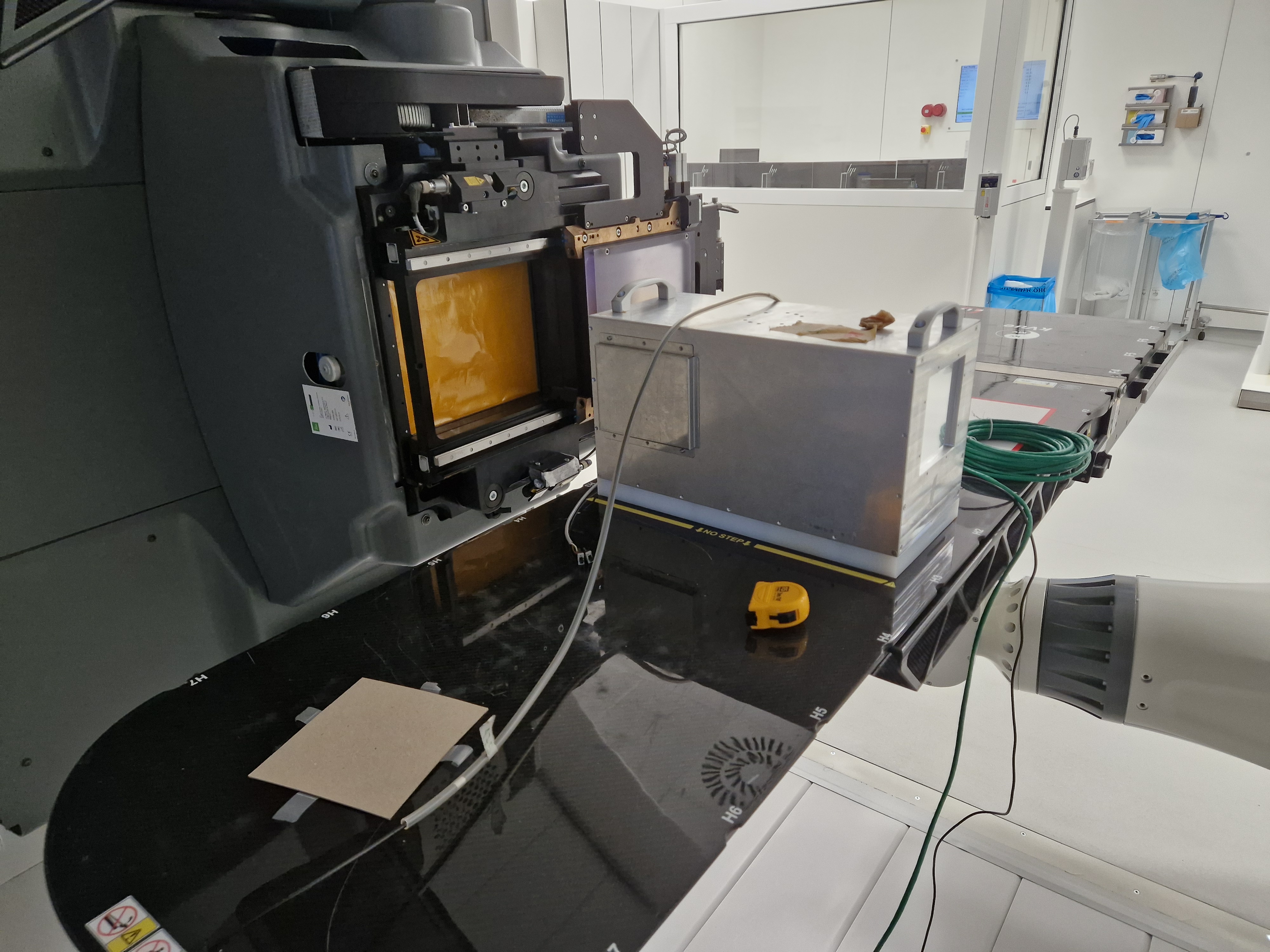
760-electrode measurement device
The D-CAF 2024 instrument doubles the electrode density of the previous system — directly translating into a twofold improvement in spatial measurement precision for particle therapy dose validation.
Instantaneous acquisition
The architecture enables real-time measurement — eliminating the delays inherent in previous systems and directly increasing treatment system availability. Less downtime, more patients treated.
Full-stack integration
Hardware design, embedded firmware, and control software developed as a single integrated system by Thelis — ensuring that measurement accuracy is preserved across every layer of the stack, not just at the sensor level.
Multi-partner academic program
Four partners — IBA, UCLouvain, ULB, and Thelis — operating across industrial and academic research tracks, co-funded by the Walloon Region under BioWin and Pôle MecaTech. Validated to academic and regulatory standards simultaneously.
A dosimetry instrument at the frontier of measurement electronics.
A new dosimetry instrument at the frontier of what measurement electronics can achieve — designed to qualify next-generation particle therapy systems and ensure the exact delivery of prescribed doses to patients. The project produced both a physical device and the software to operate it.
Validated through academic and industrial collaboration across four partner organizations, the instrument is built to qualify the next generation of particle therapy systems that will treat cancer patients worldwide. The specific technical architecture remains confidential — a deliberate choice in a field where innovation is both a competitive and a regulatory asset.
Key Challenges
Working at the intersection of physics and engineering
D-CAF was not a software project with physicists as stakeholders — it was a physics project where engineering had to keep up with the science. Implementing radiation measurement formulas developed by physicists and academics into reliable, real-time embedded software required a level of domain translation that goes well beyond typical engineering work. The physics had to be understood, not just transcribed.
Hardware precision at medical-grade standards
Designing a measurement device with 760 electrodes — doubling the density of the previous system — demanded extreme precision in the electronics architecture. Every design decision had downstream consequences on measurement accuracy, and accuracy here is not a performance metric. It directly determines whether a patient receives the correct dose.
R&D pace vs engineering discipline
Research programs move differently from product development. Specifications evolve as the science progresses, validation cycles are long, and the definition of "done" is held to academic and regulatory standards simultaneously. Operating within a consortium of universities and a global medical technology leader required Thelis to maintain engineering rigor while staying genuinely collaborative with partners working at a different rhythm and with different success criteria.
Confidentiality as a design constraint
The specific technical architecture of the measurement system remains confidential — a deliberate choice in a field where innovation is a competitive and regulatory asset. What can be said is that the system works, it is more precise than what existed before, and it is built to qualify the next generation of particle therapy systems that will treat cancer patients worldwide.