GRCP
Multi-Organization Waste Management Platform
A centralized cloud platform managing waste intake, transport, and recycling flows across 113 recyparcs and 6 intermunicipal organizations — from a single codebase.
A fragmented network of sites, each operating by its own rules.
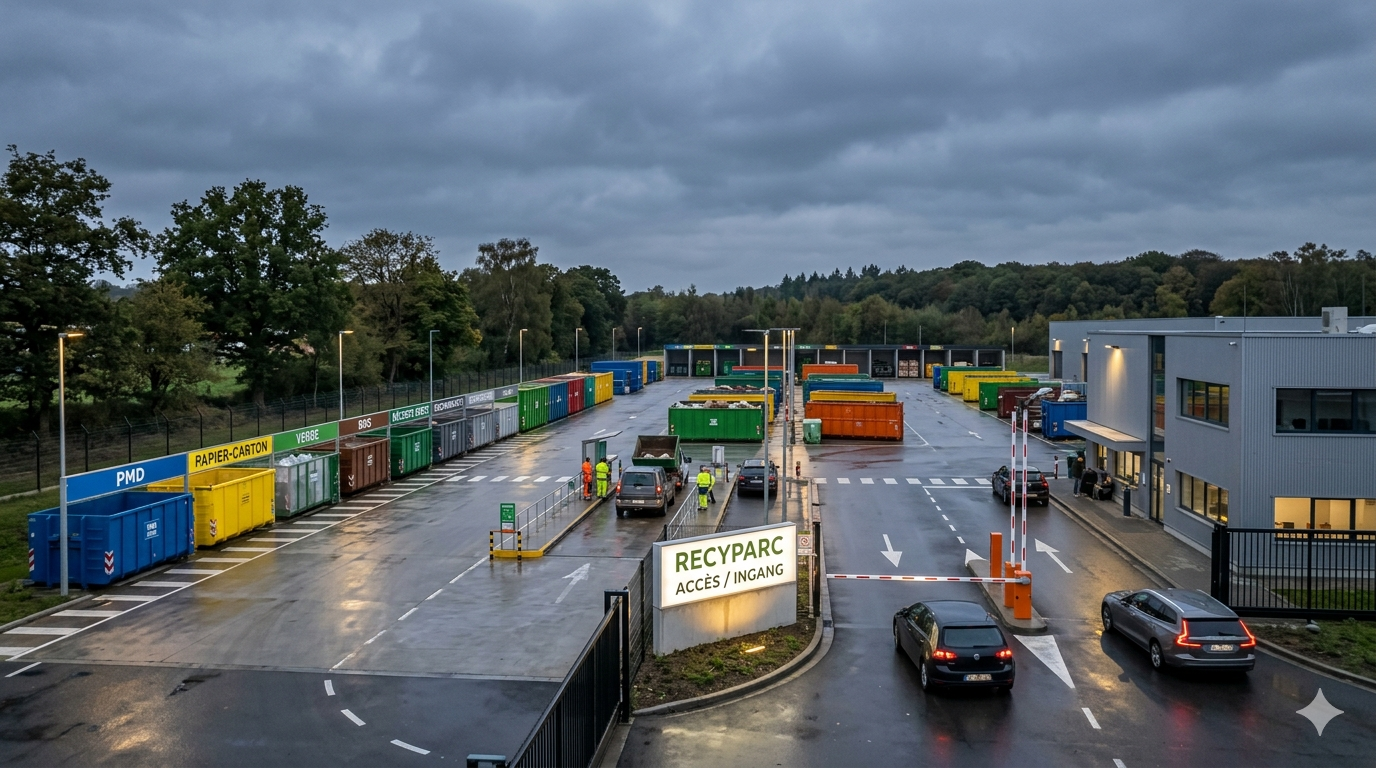
Waste management in Wallonia is operated by a network of intermunicipal organizations — each running their own recyparcs, with their own processes, their own access rules, and their own operational constraints. BEP had an existing system, but it wasn't built to scale across organizations, and it couldn't support the complexity that modern waste management requires: tracking volumes, managing transport, monitoring stocks, and generating reliable reporting across dozens of sites simultaneously.
Thelis had already built a PDA application for field agents operating in the parcs. That ground-level relationship gave us a precise understanding of how the work actually happened — what agents needed in the field, where the data gaps were, and what a real management layer would have to solve. When BEP decided to commission a full platform, that operational knowledge was already built in.
How do you build one platform for six organizations — each with their own rules, their own staff, and their own definition of what the system should do?
One platform. Six organizations. No compromises.
GRCP is a centralized cloud platform built on Angular, ASP.NET API, and SQL Server — designed to manage the full operational cycle of a recyparc network: waste intake, volume tracking, transport planning, stock management, and recycling flows. The architecture is built around a unified core with a plugin system — shared logic across all deployments, with organization-specific modules activated per intermunicipal.

Plugin architecture
A shared core handles logic common to all organizations. Organization-specific modules are activated per deployment — BEP, IDELUX, TIBI, INBW, INTRADEL, and Bruxelles Propreté all run from the same codebase, each with their own operational layer.
Real-time PDA integration
Field agents interact via a dedicated PDA application — also built by Thelis — feeding data directly into the central platform in real time. Everything stays consolidated: no manual syncs, no data gaps between field and platform.
Role-scoped access
Operators, supervisors, and intermunicipal managers all work from the same platform. Access and permissions are scoped to role and organization — what each user can see and do is determined by who they are and where they work.
Full operational cycle
Waste intake, volume tracking, transport planning, stock management, and recycling flows — managed end to end. Reliable cross-site reporting for operators and intermunicipal managers simultaneously.
113 sites. 6 organizations. Nearly 3 million citizen visits in 2023.
What started as a project for one intermunicipal now covers 6 organizations across Wallonia and Brussels — and the platform continues to expand. In 2023 alone, GRCP processed data from 113 recyparcs, tracked 917,262 m³ of waste, and recorded nearly 3 million citizen visits.
The plugin architecture that made this possible wasn't designed after the fact — it was the founding principle. Every new organization that joins runs on the same codebase, with a deployment cycle measured in weeks rather than months.
What made this project demanding.
Modeling access flows across 113 sites
Each recyparc has its own rules: which waste streams it accepts, which citizen categories have access, what quotas apply, and how exceptions are handled. Multiplied across 113 sites and 6 intermunicipal organizations — each with their own policies — this is one of the most complex domain modeling problems in the project. Getting it right required deep immersion in the operational reality of each organization, not just their stated requirements.
One platform, six organizations, no compromises
IDELUX doesn't operate like BEP. TIBI doesn't operate like INTRADEL. The temptation in multi-tenant platforms is to build the lowest common denominator. Instead, Thelis built a shared core with a plugin architecture — each intermunicipal gets the full platform plus the modules specific to their workflows. Maintaining coherence across this while each organization continues to evolve their processes is an ongoing engineering discipline, not a one-time decision.
Conflicting requirements between organizations
The hardest moments in the project weren't technical — they were about arbitration. When two intermunicipal organizations request conflicting behaviors in the shared core, every decision has downstream consequences for the others. Building a governance model for how the platform evolves — who gets what, when, and how it's implemented without breaking existing deployments — was as important as the software architecture itself.
Field adoption at scale
Deploying a platform to 113 sites means dealing with teams that range from highly technical to barely comfortable with a tablet. Thelis implemented a train-the-trainer program: rather than training every agent directly, key users in each organization were trained to become internal relays — ensuring adoption without creating a permanent dependency on Thelis for every new user or site.